Table of contents
What the Minor Arcana are#
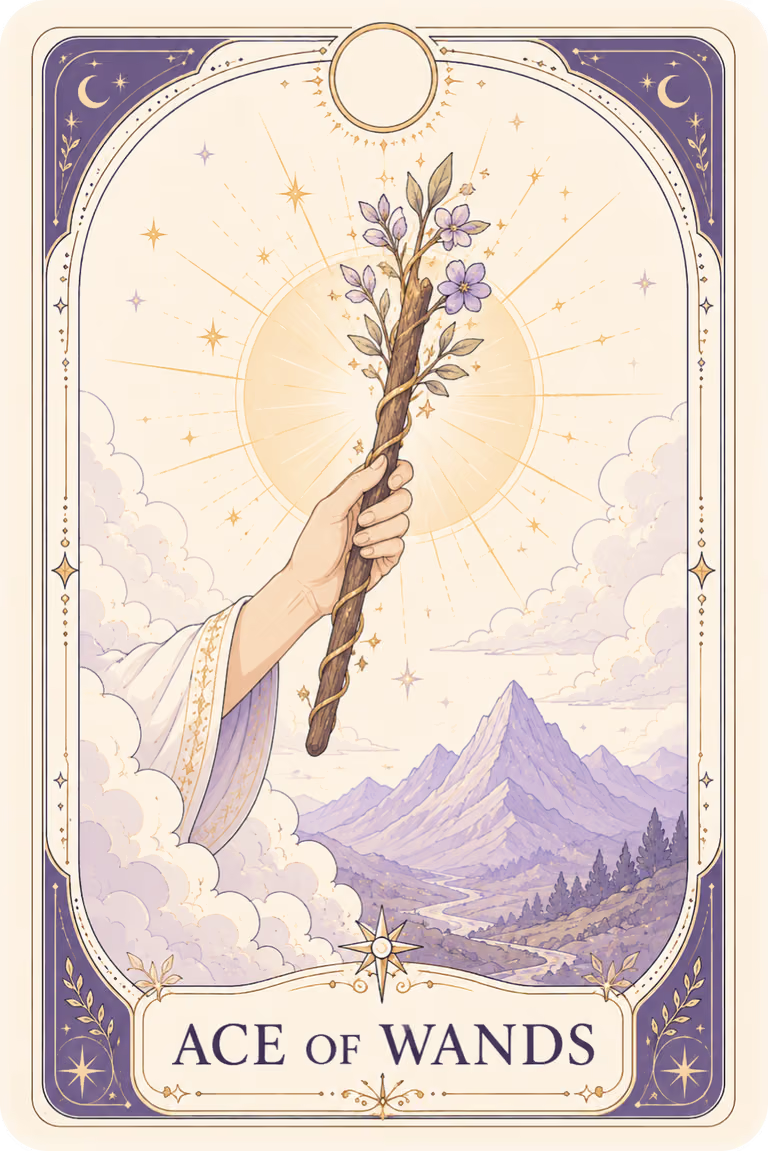
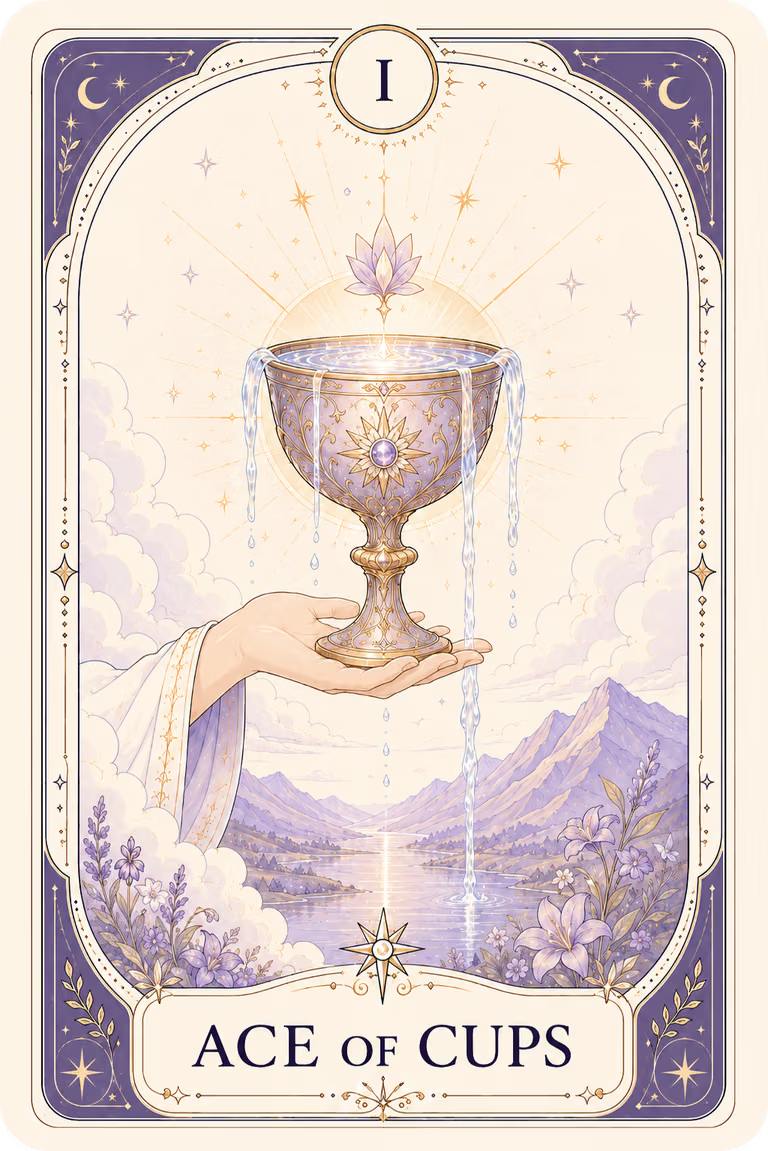
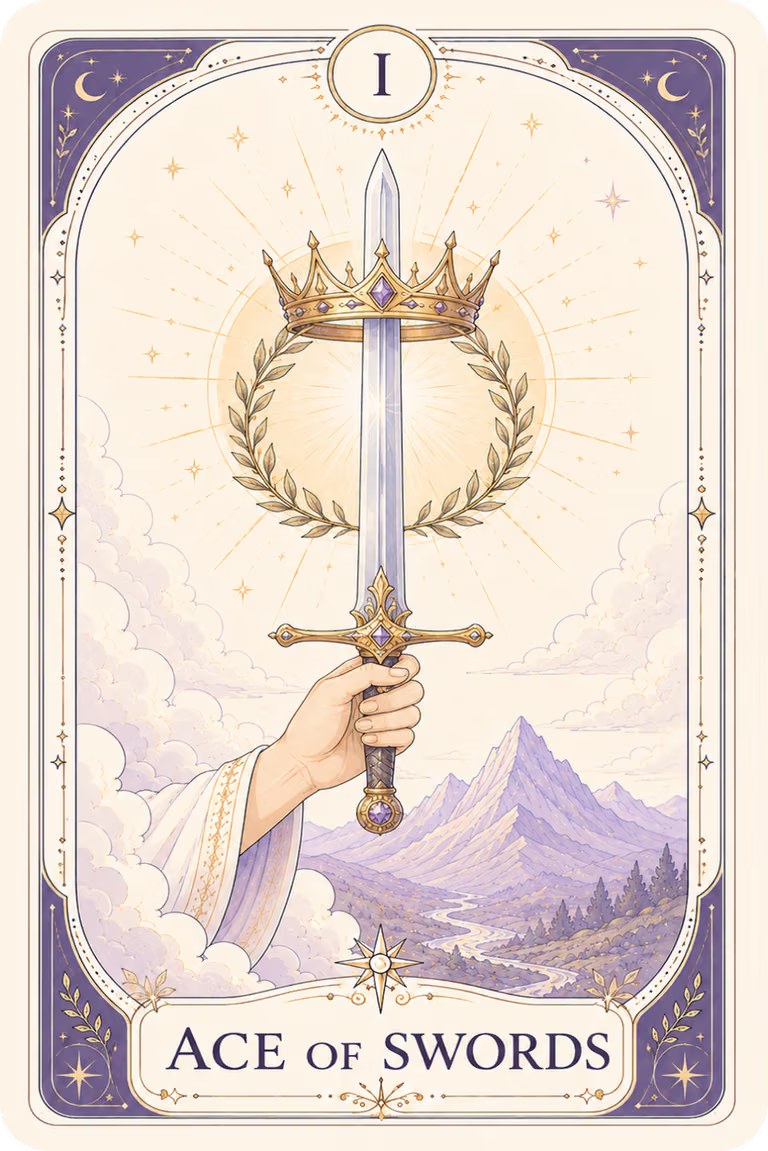
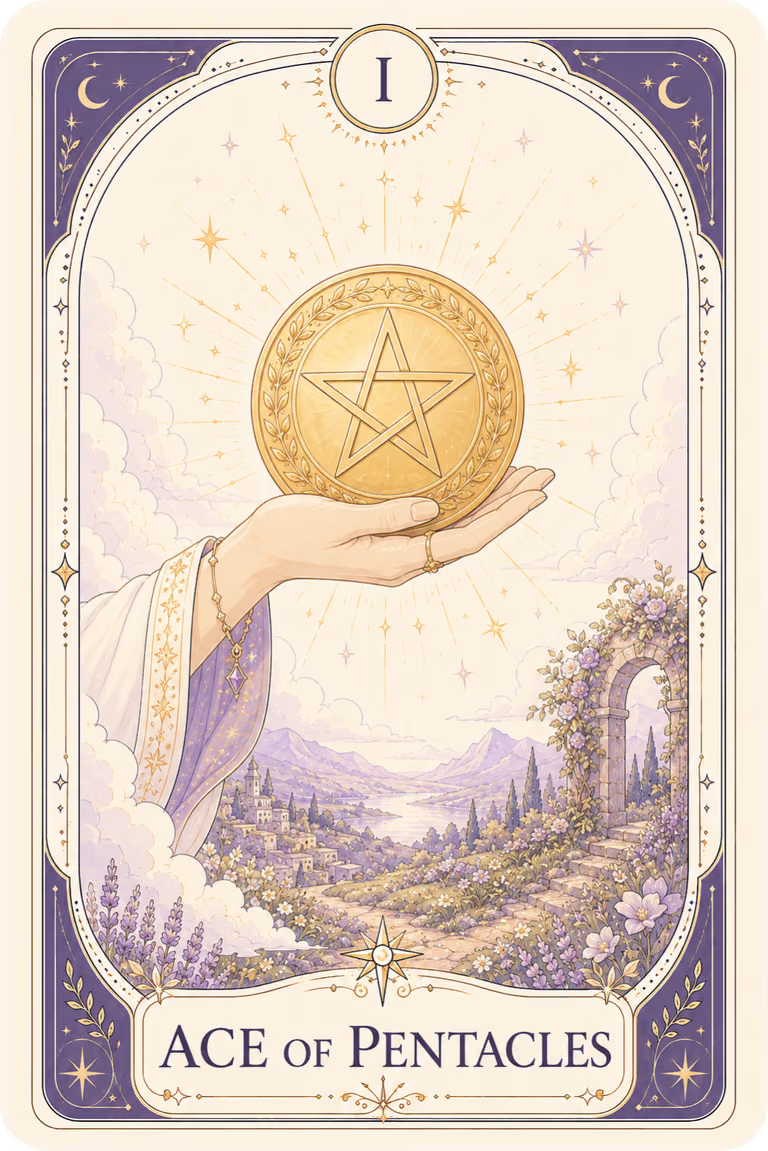
The 56 Minor Arcana are the larger half of the 78-card deck. They divide into four suits — Wands, Cups, Swords and Pentacles. Each suit runs from Ace through Ten, then adds four court cards: Page, Knight, Queen and King. Fourteen cards, four times over.
If that structure feels familiar, it should: it is close to an ordinary deck of playing cards, with one extra court rank. The earliest surviving tarot decks, made in fifteenth-century Italy, already carried four suits with four court ranks each — the shape came from the game long before anyone read meaning into it.
How they work alongside the Major Arcana#
The Minor Arcana often describe the immediate texture of a situation — the emotions, choices, tensions and practical conditions around it. The Major Arcana tend to speak to broader themes and transitions. It is a difference of register rather than of rank.
That distinction is worth holding lightly. A Minor card can land harder than a Major one — the Nine of Swords describing a specific 3am worry may be more useful than a Major card naming a grand theme you already knew about. Ask which card tells you something you did not already know, not which half of the deck it came from.
The four suits#
In many modern traditions each suit is associated with an element and a domain of life. These associations are interpretive convention rather than fixed fact — different schools assign them differently, and some readers work without elements at all — but they are consistent enough across contemporary decks to be a reliable starting point.
| Suit | Often linked to | Tends to describe |
|---|---|---|
| Wands | Fire | Drive, action, work, creative energy, momentum |
| Cups | Water | Emotion, relationships, intuition, what you care about |
| Swords | Air | Thought, communication, conflict, clarity and its absence |
| Pentacles | Earth | Money, work, body, home — the material and embodied |
You will meet other names for the same suits: Batons, Rods or Staves for Wands, Coins or Disks for Pentacles. They behave the same way. What matters in a reading is the domain: a spread crowded with Cups is telling you the question is emotional, whatever else is going on.
The numbers, Ace to Ten#
Modern readers commonly treat the Ace-to-Ten sequence as an arc: a cycle that begins with pure potential, develops, meets difficulty, and completes. Like the Fool’s Journey, this is a later interpretive framework rather than a design the cards were built around — but it is a genuinely useful one, because it lets you make sense of a card you have never studied.
| Number | Often reads as |
|---|---|
| Ace | The seed — raw potential of the suit, an offer, a beginning |
| Two | Duality, partnership, a choice between two things |
| Three | First growth, collaboration, early results |
| Four | Stability, consolidation, and sometimes stagnation |
| Five | Disruption, loss or conflict — the difficult middle |
| Six | Recovery, adjustment, movement after the five |
| Seven | Testing, patience, doing the unglamorous work |
| Eight | Momentum, mastery, or moving on |
| Nine | Near-completion; the weight of what it took |
| Ten | Fullness and the end of the cycle — often already becoming the next one |
Fives are worth a note. Every suit’s Five is uncomfortable in some way, and new readers often take that personally. Read it as the ordinary difficult middle of a cycle rather than a warning — the Five of Pentacles is not a prophecy about money, it is a picture of scarcity as an experience.
The court cards — the part everyone finds hard#
Page, Knight, Queen and King. Sixteen cards, and reliably the most confusing part of the deck for beginners, because unlike the numbered cards they show people, and it is never obvious whether the person is you, someone else, or nobody at all.
There is no single correct answer. There are four workable readings, and the useful skill is trying them in turn until one fits the question in front of you.
- A person in your life. The most literal reading — someone whose manner matches the card’s suit and rank. Useful, and the one to reach for last, because it puts the reading outside your control.
- A part of you. The Queen of Swords as the clear-eyed, unsentimental side of yourself — present, or notably absent right now.
- An approach you could take. Read the card as advice: what would meeting this situation “as the Knight of Wands” actually look like this week?
- A stage of engagement. Pages are often beginners and first curiosity; Knights, pursuit and momentum; Queens, holding and sustaining; Kings, established mastery. Read as maturity within the suit, not as gender or status.
The rank-as-stage reading is the one that unlocks the courts for most people. Combined with the suit, it becomes specific fast: the Page of Cups is early, tentative feeling; the King of Pentacles is settled, practised competence with material things.
Reading suit and number together#
Here is the practical payoff of learning the system rather than the cards. Any numbered Minor card sits at the crossing of two things you already know: what the suit is about, and where the number sits in the arc. Read the two together and you have a working interpretation without opening a book.
Three worked examples, each built the same way — number × suit:
- Five of Cups. Five is the difficult middle; Cups is feeling. Together: grief or disappointment in something you cared about — the loss felt rather than the loss counted.
- Eight of Pentacles. Eight is momentum and mastery; Pentacles is work and the material. Together: patient, repetitive effort at a craft — the unglamorous middle of getting good at something.
- Two of Swords. Two is a choice between two things; Swords is thought. Together: a decision you are refusing to make by refusing to look at it clearly.
This will not always match the traditional meaning exactly, and that is fine. It gets you close enough to read, and the gap between your reading and the book’s is often the interesting part. When you want the full meaning of a specific card — its imagery, keywords and reversed sense — every card has its own page.
Key takeaways
- The 56 Minor Arcana are four suits of fourteen: Ace through Ten, plus Page, Knight, Queen and King.
- They describe the immediate texture of a situation; the Majors speak to broader themes. It is a difference of register, not of rank.
- Suit-element links and the Ace-to-Ten arc are modern interpretive conventions, not fixed rules — useful, not binding.
- Court cards can be a person, a part of you, an approach, or a stage of engagement. Try them in that order, reversed.
- Read any numbered Minor as number × suit and you can interpret cards you have never studied.
Frequently asked questions
What is the difference between the Major and Minor Arcana?
The 22 Majors are unsuited, named cards dealing with broader themes and transitions. The 56 Minors are divided into four suits and describe the immediate texture of a situation — emotions, choices, tensions and practical conditions. Neither half outranks the other.
Do I need to memorise all 56 Minor Arcana?
No. Learn the four suits and the Ace-to-Ten arc, and you can read most numbered cards by combining the two. Look up individual meanings as the cards actually appear.
What do the four tarot suits mean?
In many modern traditions Wands relate to drive and action, Cups to emotion and relationships, Swords to thought and conflict, and Pentacles to money, work and the body. These are common associations rather than fixed definitions, and traditions vary.
How do I read court cards?
Try four readings in turn: a stage of engagement within the suit, an approach you could take, a part of yourself, or an actual person. The stage reading — Page as beginner, King as established — resolves the most cards for most readers.
Are Minor Arcana cards less important than Major ones?
No. A Minor card frequently lands harder because it is specific. The better question is which card tells you something you did not already know.
Continue your practice
The system makes most sense when a real card is sitting in front of you.
Continue learning
Cards mentioned in this guide: Ace of Cups · Five of Pentacles